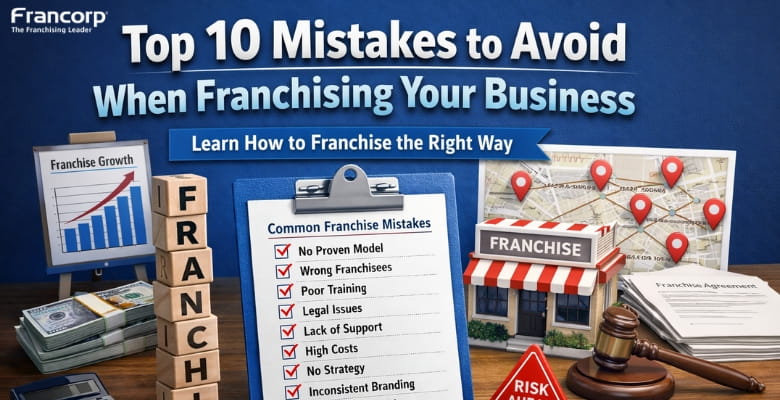
Franchising your business is one of the fastest ways to scale a successful brand, expand into new markets, and build long-term enterprise value. However, franchising a business is not just about selling franchises—it requires strategy, systems, legal readiness, and operational discipline. Many brands fail not because the concept is weak, but because they make avoidable mistakes while franchising a company.
If you’re planning to franchise your business or are exploring how to start franchising your business, here are the top 10 mistakes you must avoid to build a strong, scalable, and sustainable franchise network.
1. Franchising Too Early Without a Proven Model
One of the biggest mistakes in franchising your business is expanding before the model is proven. A business must demonstrate consistent profitability, replicable operations, and unit-level success across locations before it can be franchised. Without this foundation, franchisees inherit untested systems—leading to network failure.
2. Not Understanding What a Franchise Really Is
Many founders rush into expansion without fully understanding what is franchise and how it differs from company-owned growth. A franchise is a long-term partnership, not a short-term revenue opportunity. It requires structured systems, training, support, and compliance—far beyond simply licensing a brand name.
3. Underestimating the Cost of Franchising
The cost of franchising is often misunderstood. Beyond legal documentation, there are costs for operations manuals, training systems, technology platforms, brand development, and franchise sales infrastructure. Brands that underinvest in these areas struggle to scale sustainably.
4. Weak Franchisee Selection
Growth-focused brands sometimes approve franchisees too quickly. Choosing partners based only on capital, not capability, is a critical error when franchising a business. The right franchisee must align with brand values, operational discipline, and long-term vision.
5. Lack of Standardized Operating Systems
A business cannot be franchised without clearly documented and standardized systems. Operations manuals, training programs, and performance benchmarks are the backbone of successful franchising your business. Without standardization, brand consistency breaks down across locations.
6. No Long-Term Franchise Strategy
Many brands focus only on selling franchises, not building a network. Successful franchising a company requires a long-term expansion plan covering territory mapping, market prioritization, and support infrastructure. Strategic planning is essential to compete in the growing franchising industry.
7. Ignoring Brand Positioning and Differentiation
A brand entering franchising must stand out in a crowded market. Without a clear value proposition, it becomes difficult to attract quality franchise partners. Strong brand identity is a key part of the long-term benefits of franchising, enabling faster expansion and stronger market presence.
8. Inadequate Franchisee Support Systems
Franchise success depends on ongoing support—not just initial training. Brands that fail to provide marketing, operations, and performance support weaken their network. This is why working with an experienced franchise business consultant or global franchise consulting firm becomes critical.
9. Non-Compliance with Legal and Regulatory Frameworks
Franchising is a legally structured business model. Incomplete documentation, unclear agreements, or regulatory gaps can expose brands to serious risks. Professional guidance ensures your franchise structure is compliant and investor-ready.
10. Treating Franchising as a Short-Term Revenue Play
The biggest mistake in franchise your business strategy is focusing on franchise fees instead of network success. Sustainable franchising is built on unit economics, franchisee profitability, and brand equity—not just upfront sales.
Why Expert Guidance Matters in Franchising
Avoiding these mistakes requires more than ambition—it requires experience. Professional advisors understand the complexities of franchising a business, from strategy and structure to execution and scale. With expert guidance, brands can unlock the true benefits of franchising while minimizing risk.
Final Thought
Franchising your business is a powerful growth engine—but only when done right. By avoiding these common mistakes and building a structured, long-term strategy, brands can scale faster, stronger, and more sustainably in today’s competitive franchising industry.
Frequently Asked Questions (FAQs)
What is franchising a business?
Franchising a business is a growth strategy where a company allows independent operators (franchisees) to use its brand, systems, and support in exchange for fees and ongoing royalties.
How to start franchising your business successfully?
To start franchising your business, you need a proven business model, strong unit economics, standardized systems, legal documentation, and a long-term expansion strategy.
What is the cost of franchising a business?
The cost of franchising varies based on brand size and market, but typically includes legal setup, operations manuals, training systems, technology, and franchise sales infrastructure.
Is franchising a company better than opening company-owned stores?
Franchising a company enables faster expansion with shared capital and lower operational risk, making it a preferred growth model in the global franchising industry.
Why should brands work with a franchise business consultant?
A franchise business consultant provides strategic, legal, and operational expertise to help brands scale correctly and avoid costly mistakes during franchising.